A Blueprint for Scaling AI and Resilience in Southeast Asia
Fujitsu / December 16, 2025
Most business leaders in Southeast Asia have moved past debating whether to use AI. They are now trying to figure out how to make it work in a world shaped by geopolitical tensions, trade shifts, and a fast‑moving global AI race.
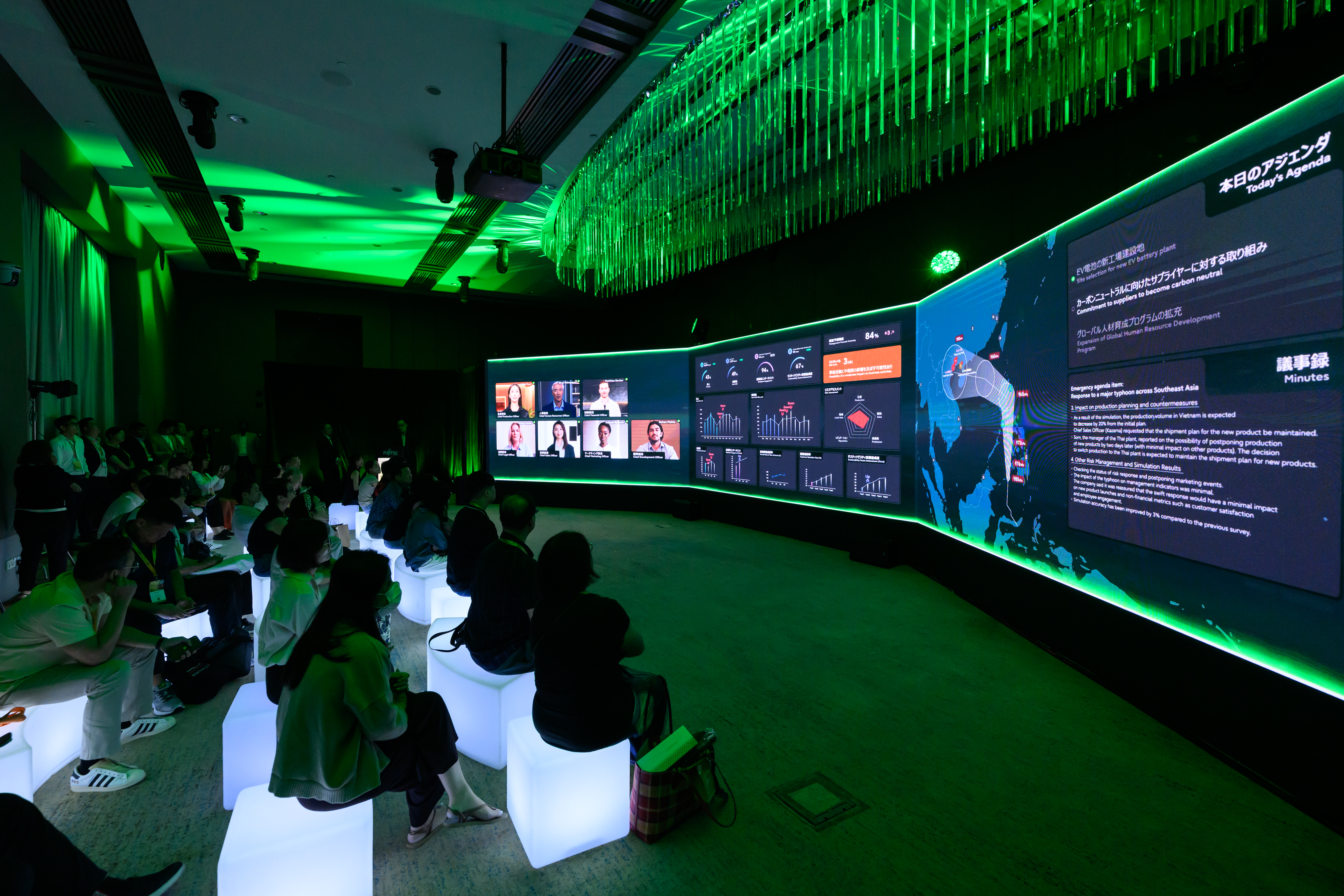
In October, more than 300 senior executives from Singapore and Thailand gathered at Fujitsu ActivateNow Southeast Asia 2025 to explore what business resilience looks like in this new landscape.
Contents
- Why AI Transformation is Essential for Business Resilience
- How Agentic AI and A2A enable smarter business decisions
- The AI Transformation Roadmap: From digitalisation to decision intelligence
- Regional lenses: Singapore and Thailand
- Singapore firms prioritising data governance before scaling AI
- Thailand firms racing to address data and digital capability gaps
- Collaboration as the engine of enterprise AI strategy
- Actionable Insights for Scaling AI and Driving Business Transformation
Why AI Transformation is Essential for Business Resilience
Resilience today is less about recovering after disruption and more about staying ready. Organisations need to spot risks earlier, act faster, and keep adapting as markets, regulations, and supply chains move. AI becomes critical here because it can connect fragmented data, surface weak signals, and support always‑on decision intelligence instead of occasional reporting.
According to IDC FutureScape 2025, AI investment across Asia Pacific is expected to grow 1.7 times faster than overall digital technology spending over the next three years. Yet this enthusiasm hides a common challenge: most enterprises launch successful AI pilots, but scaling them to drive actual business value remains difficult.
How Agentic AI and A2A enable smarter business decisions
For AI to truly support resilience, it must do more than make predictions. It needs to help systems and teams act, learn, and coordinate across the business. That is where Agentic AI and A2A (Agent‑to‑Agent) collaboration come in.
Agentic AI can reason independently, plan strategically, and act autonomously while handling tasks that need contextual awareness and adjustment.
Consider what these agents do across industries today:
- Manufacturing agents monitor equipment and trigger preventive maintenance before failures occur.
- Logistics agents forecast delays and instantly reroute supply chains to minimise disruption.
- Finance agents reconcile data across systems and surface actionable recommendations in real time.
When these agents collaborate, A2A (Agent-to-Agent) interactions allow insights to flow automatically across different functions, optimising results enterprise-wide. Fujitsu experts describe this as the next stage of digital maturity, where autonomous, interconnected systems learn from each other to drive agility, decision intelligence, and business resilience. This is the foundation of an AI-powered ecosystem that supports decision intelligence and business resilience at scale.
The AI Transformation Roadmap: From digitalisation to decision intelligence
To help organisations move from scattered use cases to a connected AI-powered ecosystem, Fujitsu introduced its AI Transformation Roadmap at Fujitsu ActivateNow Southeast Asia. The roadmap describes four layers that build on each other and lead toward decision intelligence.
Fujitsu's framework breaks this journey into four interconnected layers:
- Data Foundation: Combine siloed systems into unified, accessible datasets.
- Trusted Data: Maintain accuracy, governance, and transparency for reliable insights.
- Secured and Trusted AI: Put safeguards in place to prevent bias, protect privacy, and support ethical use.
- AI-Powered Ecosystem: Enable intelligent agents to share insights and orchestrate decisions across the business.

Fujitsu’s AI Transformation Roadmap
Together, these layers allow enterprises to move beyond isolated analytics into continuous, automated decision-making. This is Decision Intelligence, where technology supports human reasoning with real-time insight and foresight.
By 2028, Fujitsu predicts that most organisations will be operating in AI-powered ecosystems capable of learning, adapting, and acting autonomously.
A live demonstration showed AI orchestration connecting supply chain data with predictive analytics across sales, marketing, production, legal, and finance, demonstrating how intelligence can shift decision-making from reactive to proactive while keeping human oversight.
Regional lenses: Singapore and Thailand
As AI evolves from isolated use cases into more connected and intelligence-driven systems, organisations must rethink how they shape their transformation roadmaps. The event highlighted how different markets are preparing for this broader shift in distinct ways.
Singapore firms prioritising data governance before scaling AI
Singapore remains the region’s most mature AI market, supported by strong national policies such as the National AI Strategy 2030. Yet even mature markets face scaling challenges.
Dr Chris Marshall, Vice President at IDC Asia Pacific, explained that while developing an AI proof of concept is relatively straightforward, fewer than 30 percent progress to full production. To close this gap, CXOs need to prioritise use cases based on business value, feasibility and integration across functions to achieve repeatable deployment.
Polling during the event supported these insights. Many Singapore organisations are prioritising data governance before scaling AI, while talent shortages continue to slow progress. Rather than rushing into deployment, enterprises are reinforcing foundational capabilities to increase their likelihood of successful scale.
Thailand firms racing to address data and digital capability gaps
Thailand is at a pivotal moment in its AI and digital transformation journey. The country’s workforce is shrinking for the first time, while global trade barriers and digital competition are rising. Dr Pipat Luengnaruemitchai, Chief Economist at Kiatnakin Phatra Bank, highlighted the need for technology-driven productivity supported by strong data protection and cybersecurity.
Companies such as Bangchak and Toyota Connected shared how AI, data, and cross-functional collaboration are improving efficiency and innovation in energy and automotive sectors. Jirayut Srupsrisopa, CEO of Bitkub, shared how digital infrastructure can help Thailand turn an ageing society into a longevity economy. Feedback showed that most Thai organisations aim to address data and digital capability gaps within two years.
Despite differences in pace, both markets underscored the same insight: a trusted data foundation is essential for scaling AI successfully.
Collaboration as the engine of enterprise AI strategy
As Dr. Chris Marshall from IDC puts it, “AI is not a solo game. Success depends on coordination across functions and organizational levels, from the C-suite to technical and business staff.” Functional teams must collaborate closely as many AI use cases rely on shared data – for example, marketing, sales, and customer success collaborating to deliver better customer outcomes. Companies such as Bangchak and Toyota Connected showed how cross-functional alignment combined with AI and data drives real business impact today, improving efficiency, innovation, and sustainability.
Looking ahead, the next stage of AI transformation is decision intelligence. This approach enables organisations to coordinate decisions across functions seamlessly, shifting from reactive responses to proactive and predictive operations. By embedding intelligence into processes and unifying data governance, enterprises can scale AI initiatives more effectively and create new opportunities for growth and business model innovation.
No organisation transforms alone. Technology partners including NetApp, ServiceNow, SAP, Dell, Fortinet, Juniper, and LogicMonitor demonstrated solutions that complement Fujitsu’s approach, helping enterprises deploy data and AI safely and at scale. Ultimately, collaboration across internal teams, business functions, and trusted technology partners forms the foundation for resilient, intelligence-driven enterprises.
Actionable Insights for Scaling AI and Driving Business Transformation
- Start with business outcomes. Focus on the decisions that drive the most value for resilience and performance.
- Invest in trusted data. Quality, governance, and visibility are the foundations of scalable AI.
- Think cross-functionally. Connect business and technology teams to drive alignment and adoption.
- Leverage partnerships. Work with experienced ecosystem providers to accelerate time to value and manage risk.
- Prepare for agentic collaboration. Explore how AI agents and automation can augment teams across the enterprise.
The conversations at Fujitsu ActivateNow Southeast Asia 2025 showed that resilience is increasingly defined by readiness and intelligence, not just recovery. Enterprises that combine strong data foundations, responsible AI, Agentic AI capabilities, and deep collaboration will be best placed to thrive in Southeast Asia’s fast‑changing landscape.
Fujitsu remains committed to helping organisations move from AI exploration to realisation through co-creation and partnership.
To explore more insights, solution showcases, and success stories from the event, visit the Fujitsu ActivateNow Southeast Asia 2025 microsite. Resilience begins when intelligence meets collaboration and Southeast Asia’s leading enterprises are already proving what that future looks like.
Editor's Picks